For decades, clinical neurology led with the assumption that after 18 months, an injured brain stops healing. In his True Performance brain rehab and sports recovery clinic in Rancho Santa Fe, Dr. Jeff McWhorter is proving that the window never truly closes.
“The biggest misconception is that the brain stops adapting,” says McWhorter. “That window of opportunity for recovery is not necessarily always closed after a head injury in 18 months,” he says. “Some patients have been 15, 20 years from onset of injury and still see dramatic improvements take place.”
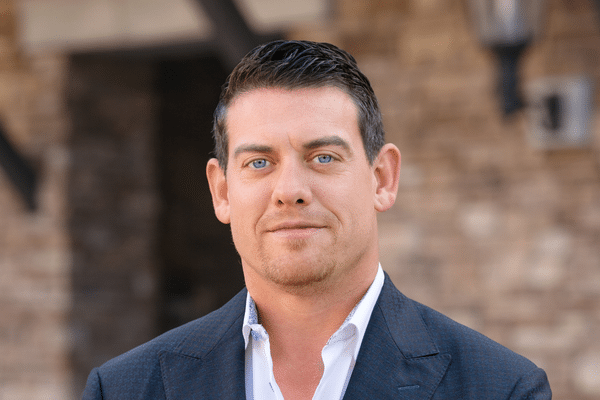
Dr. Jeff McWhorter, DC, MSR, ART
McWhorter’s arrival in Southern California comes at a pivotal moment as the global scale of neurological trauma is becoming impossible to ignore. Each year, an estimated 69 million people worldwide sustain a traumatic brain injury (TBI), according to research published in The Lancet Neurology. In the United States alone, the CDC reports roughly 2.8 million TBI-related emergency visits and hospitalizations annually.
Concussions, often dismissed as “mild” TBIs, account for a staggering portion of these cases, particularly among youth athletes. Yet, despite the scale, brain injuries remain notoriously difficult to track. Unlike a broken bone, a concussion rarely shows up on a standard MRI.
“If I dislocate a shoulder, you can see it,” McWhorter explains. “And if I have a concussion, you could walk around just fine from appearance-wise, but what’s going on in here is vastly deficient.”
Symptoms are often ghosts in the machine: irritability, memory lapses, or a vague sense that the world has lost its sharpness. A 2025 meta-analysis published in JAMA found that up to 30 percent of concussion patients experience persistent symptoms well beyond the typical recovery period.
However, it’s not just athletes that are seeking solutions for their symptoms or to optimize their brain’s health. McWhorter’s patients at his True Performance Clinic in Rancho Santa Fe are just as likely to be a student-athlete as they are a CEO seeking cognitive endurance or a retiree fighting the mid-afternoon mental fog.
“People don’t have unlimited time,” he says. “The question is: how do we make this both effective and efficient?”
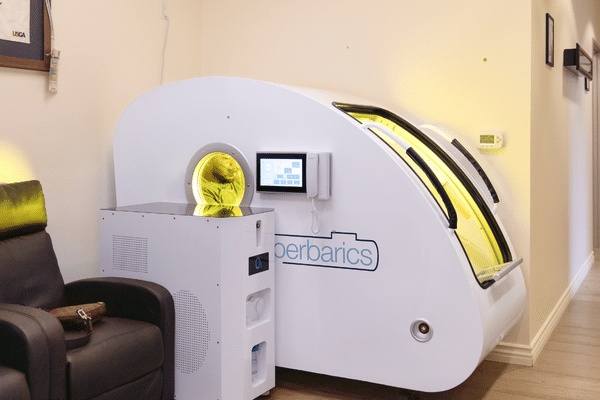
Hyperbaric Oxygen Chamber at True Performance in Rancho Santa Fe
His background, which includes serving as a team-referred provider for the Denver Broncos, has allowed him to translate elite athletic protocols into accessible care for all. McWhorter’s model leans heavily on a multi-hour evaluation centered around the quantitative electroencephalogram (qEEG), or brain map. While qEEGs are not new, their application has historically been limited by interpretation. In this clinic, scans are hand-artifacted by a small team of specialists who parse the data for irregularities in brainwave activity and asymmetries between hemispheres.
What emerges is a full narrative as the brain, it seems, keeps receipts and patients are often struck by the specificity. In one "blind" assessment, a patient offering no personal history was told the approximate age and location of a prior head injury with startling precision. In another, the data suggested a long-standing tendency toward hyper-rational processing with diminished emotional integration, a "logical" brain struggling to feel.
“It’s not just where the brain is today,” McWhorter notes. “It’s how it got there.”
From this data, McWhorter constructs a "stacking" protocol that blends neurofeedback, a form of operant conditioning where patients train to regulate their own neural patterns, with Hyperbaric Oxygen Therapy (HBOT).
While neurofeedback remains a contested yet promising field for treating PTSD and ADHD, HBOT carries a more established medical lineage. A 2020 study published in Aging reported that repeated HBOT sessions were associated with improved cognitive performance and increased cerebral blood flow in older adults.
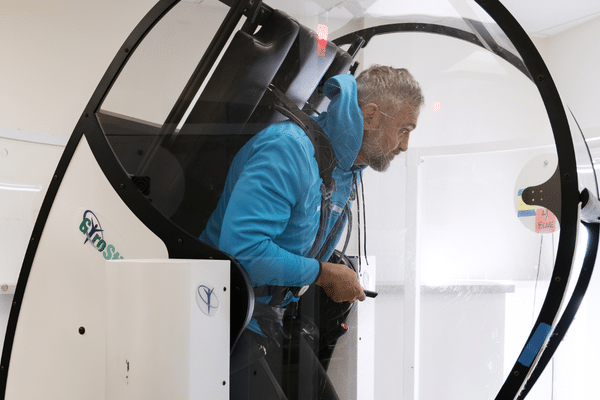
GyroStim Therapy at True Performance
The clinic also aims to trigger neuroplasticity through the GyroStim, a computer-controlled, multi-axis rotational chair that McWhorter is one of only 43 providers worldwide to operate. As the chair rotates in multiple directions, patients use a laser pointer to hit illuminated targets. A typical session lasts about 30 minutes, with multiple short runs designed to push processing speed, hand-eye coordination, and balance. This measurable, adaptive feedback loop makes GyroStim a uniquely effective tool for both rehabilitation and performance enhancement.
However, McWhorter is careful not to frame any one modality as a panacea or operate from a one-size-fits-all approach. “There’s no single solution. That's why we layer,” he says. "We are all vastly different and the brain doesn’t lie about that.'"
True Performance, 18029 Calle Ambiente #507, Rancho Santa Fe, CA 92067
More from Wellbeing
View All Wellbeing